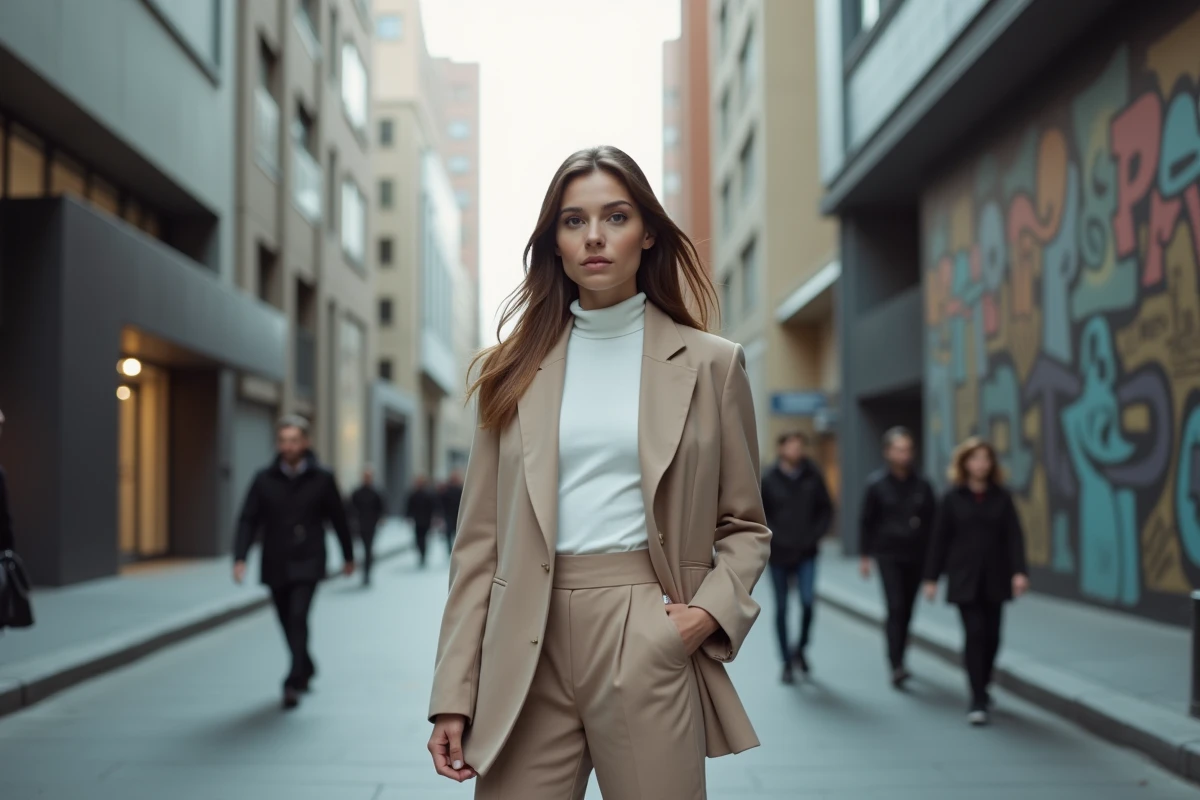
2024 has not chosen a side: the runways swing between straight lines and deconstructed volumes, between a return to radical sobriety and an explosion of ornaments. On one side, sharp suits like blades. On the other, pieces that seem to emerge from an artist’s studio, ready to shake up the street as much as the plush salons. Streetwear no longer just flirts with haute couture; it firmly establishes itself, blurring the lines. The boundaries no longer hold. Fashion houses, for their part, draw freely from the 2000s but do not hesitate to exhume seventies prints to reinvent them. Designers and visual artists join forces, making collections a playground for experimentation, at the crossroads of art and clothing. Far from settling for mere nostalgic recycling, contemporary fashion tackles its archives to better subvert their meaning, preferring reinterpretation to sterile imitation.
What contemporary fashion says about our time
Contemporary fashion stands as a turbulent reflection of our societies while transforming into a creative laboratory. Each season, it revisits past decades, true to this “modernized nostalgia” described by Jean Baudrillard. But nostalgia is never simple. Designers navigate between vintage, those period pieces we love to unearth at markets or find in family closets, and retro, which reinvents the old with today’s techniques. This dialogue between past and present draws a fundamental line: fashion continually negotiates between heritage and innovation, between sophisticated couture and garments designed to last.
In this evolution, sustainability emerges as an obvious necessity. Abby-Maud makes material recovery a signature, pushing the industry to reconsider its practices. Stella McCartney, a pioneer of sustainable fashion, confirms that eco-responsible convictions are no longer merely an accessory discourse. Researchers and experts, Frédéric Godart, Melody Thomas, Alice Pfeiffer, and Sophie Abriat, dissect these mutations and cross perspectives between sociology, politics, and aesthetics. Fashion now faces challenges that far exceed the simple question of style.
This panorama reveals a constellation of influences that traverse contemporary collections. We encounter the audacity of the claimed “ugly,” political messages slipped into a slogan or a pattern, debates on cultural appropriation, and the search for meaning in the act of dressing. The analyses of Vincent Bastien, Jean-Noël Kapferer, or Olivier Saillard decode these trends, showing how each garment, each detail, carries the trace of a collective narrative. A page like the fashion section of Bozarblog.info measures this: fashion is thought of as a language, a field of expression where creativity emancipates itself from mere consumption to question society.
How to appropriate trends without losing your style?
Adopting current trends does not mean sacrificing your personality on the altar of mimicry. On the contrary: the whole question is finding the balance between collective momentum and self-assertion. The look is never an exact copy of a runway or an Instagram feed, but an intimate construction. The trainers at IFA Paris, Alycia Da Witt and Julio Santini, emphasize the art of sorting, selecting, and appropriating. Spotting what truly resonates, what aligns with your story, that is what matters.
Here are some tips for creating a style that remains true to yourself while staying in tune with the times:
- Identify the dominant codes of contemporary fashion: the silhouette of a cut, the texture of a fabric, the choice of a color.
- Combine these elements with the key pieces of your wardrobe to maintain a coherence that reflects you.
- Dare to experiment: a strong piece, a unique accessory, but always in harmony with your look and personal narrative.
Streetwear proves this every day. Stüssy, Supreme, and many others have transformed their urban roots into global codes, blending musical, artistic, and pop culture influences. But ultimately, each enthusiast writes their own score, juggling between customized sneakers, vintage finds, or bespoke creations. Stylists today form a generation that combines inventiveness, technicality, and a sense of context while maintaining a clear-eyed stance towards the sirens of trend. Dressing becomes an act, a statement, a nuance worn on oneself.
Throughout the pages of Bozarblog.info, this plurality stands out: materials, cuts, and influences intersect, respond, and reinvent themselves. Adopting a trend is not about conforming to it; it’s about seizing it, reshaping it, and twisting it in your own way. Contemporary fashion no longer advocates uniformity; it celebrates diversity and freedom of expression, inviting everyone to compose their own wardrobe vocabulary.
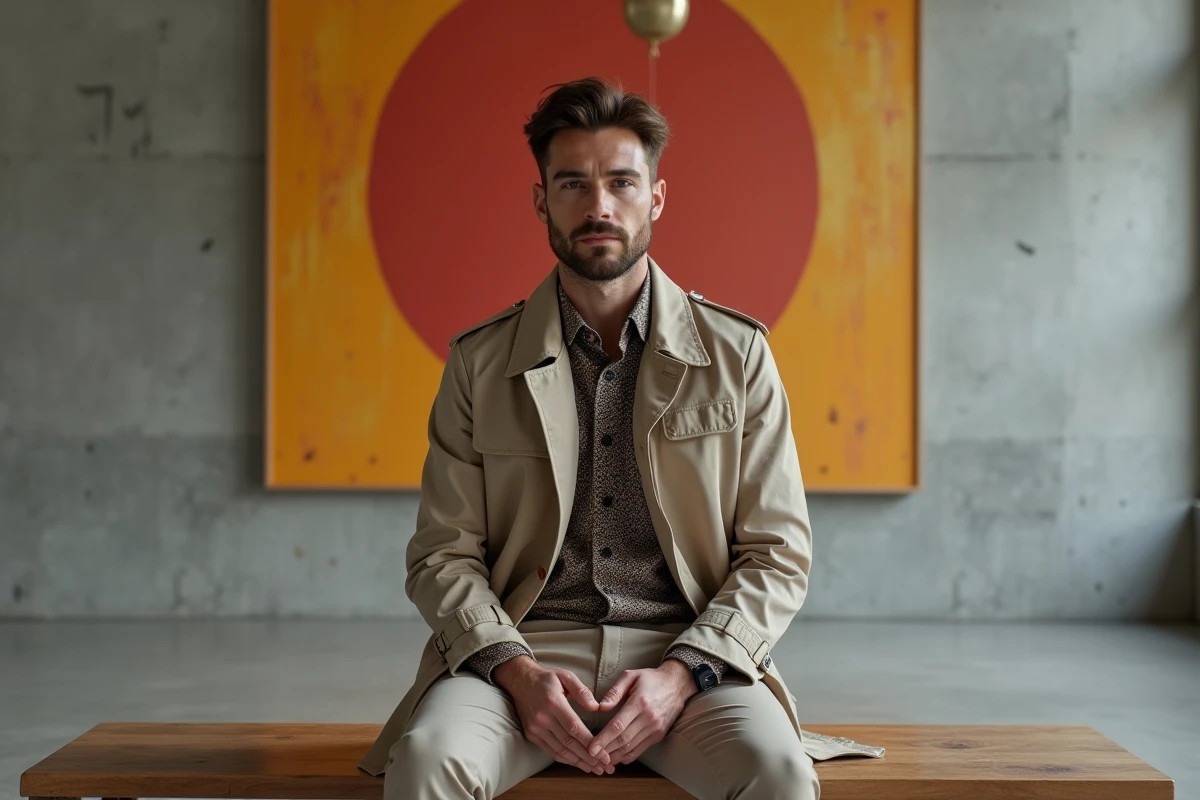
Vintage, art, and pop culture: the influences electrifying current creation
The captivating universe of contemporary fashion feeds on a constant interplay between memories and inventions, between reappropriations and dialogues with history. Vintage captivates with its emotional charge: each old garment carries its marks, its stories, its mysteries. Retro, on the other hand, reinterprets the great decades of the 20th century, from the glamour of the 1920s to the excesses of the 1980s. This “modernized nostalgia” that Baudrillard spoke of is this fertile tension that shifts the lines, inviting a renewal of forms without ever going in circles.
Fashion houses no longer hesitate to venture into the realms of art and pop culture. Yves Saint Laurent transformed the Mondrian dress into a visual manifesto; Elsa Schiaparelli and Salvador Dalí united their worlds to blur the boundaries between fashion and surrealism. Today, collaborations abound: Louis Vuitton invites Yayoi Kusama or Jeff Koons, Dior draws inspiration from Niki de Saint Phalle, Loewe invites Anthea Hamilton. Runway shows become performances, and collections become full-fledged exhibitions.
Pop culture infuses fashion with its vibrant patterns, bold colors, and nods to comic books or street culture. But this momentum does not come without commitment: creators like Abby-Maud prove that one can marry artistic audacity with responsibility, betting on materials sourced from recycling and a profound ethical reflection.
Hybridization is becoming widespread: from Hermès windows imagined by Leïla Menchari or Zim & Zou, to exhibitions at the Fondation Louis Vuitton designed by Frank Gehry, fashion blurs the lines. Clothing becomes a medium of expression, the workshop a space for experimentation where history, art, and commitment meet. Thus, the fashion of tomorrow is drawn: elusive, vibrant, and more alive than ever.