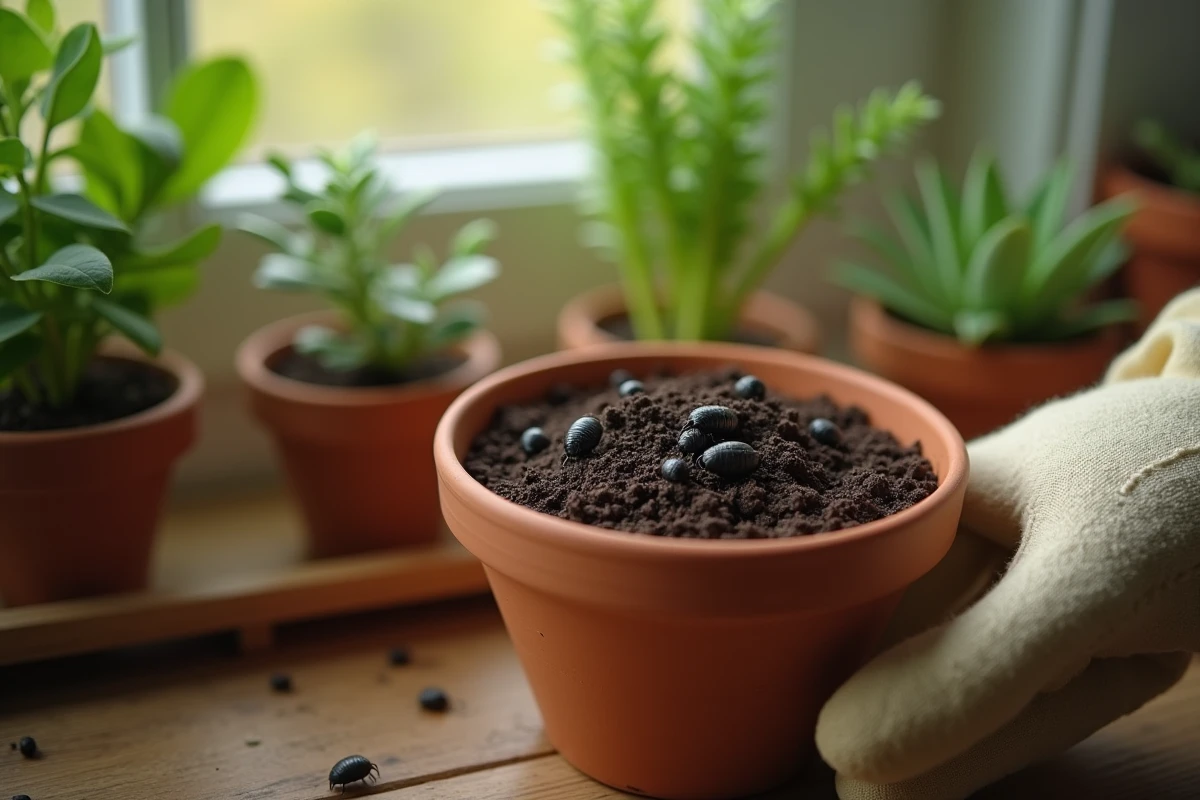
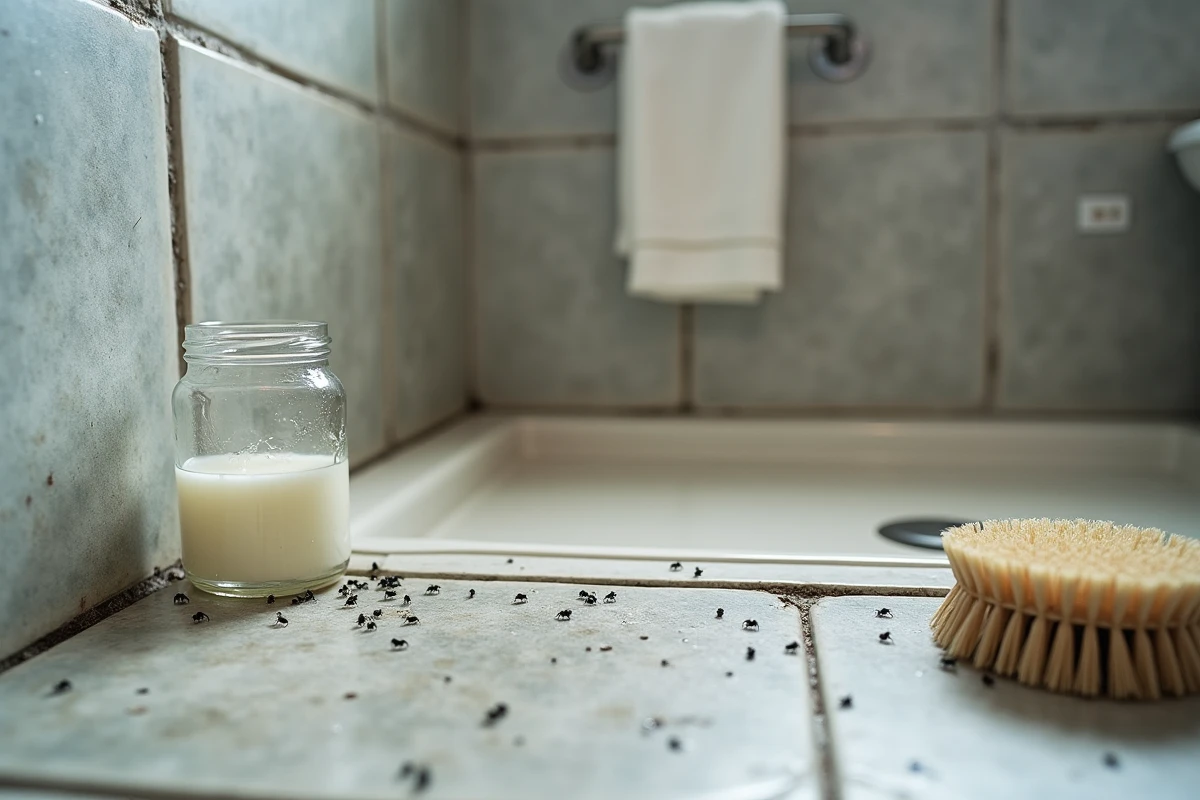
These tiny black bugs that jump on the edge of your bathtub or on the surface of the potting soil are neither fleas nor gnats. They are springtails, arthropods just a few millimeters long attracted by a single factor: moisture. Before looking for a miracle recipe, it’s better to understand why they have made your home their habitat, as the sustainable solution starts there.
Micro-leaks and hidden moisture: the real cause of a springtail invasion
Have you noticed that springtails always appear in the same places, the bathroom, the basement, around indoor plants? It’s not a coincidence. These arthropods breathe through their skin and die within hours in dry air. Their presence indicates a localized excess of moisture, sometimes invisible.
Building and pest management professionals have pointed out for several years the correlation between springtails and micro-infiltrations: a worn shower seal, a poorly sealed wall base, a crack behind a baseboard. Such discreet leaks that you can’t see, but sufficient to maintain a humidity level conducive to proliferation.
Rather than spraying an insecticide on the surface, run your hand along the baseboards in your bathroom. A cold or slightly damp wall to the touch betrays an infiltration. Some inspectors use a thermal camera to locate these areas. Treating the leak eliminates the colony without any product.
If you want to delve deeper into natural methods for managing black springtails at home with Jamet Espaces Verts, the approach remains the same: identify the source of moisture first, then treat.

Grandmother’s tips against springtails: those that work and those that disappoint
Not all homemade recipes are equal. Some temporarily repel springtails, while others have no measurable effect. Here’s an honest sorting.
Diluted black soap in water: an effective contact repellent
Liquid black soap, diluted with a few tablespoons in a liter of warm water, acts by contact. It dissolves the fine waxy layer that protects the body of springtails, dehydrating them. Sprayed on high-traffic areas (shower tray edges, surface of potting soil, damp baseboards), it reduces visible populations within a few days.
Black soap does not solve the underlying moisture problem. Expect to have to reapply as long as the water source persists.
White vinegar: useful but limited
White vinegar slightly acidifies surfaces and acts as a temporary repellent. Sprayed on tiles or around plant pots, it disrupts springtails. Its effect fades within a few hours after evaporation.
It works better in conjunction with black soap than when used alone. There’s no need to pour it directly into the potting soil: the acidity may damage the roots without eliminating the springtails deeply.
Diatomaceous earth: the mechanical trap
Diatomaceous earth (fossil silica powder) is often mentioned in natural solutions against crawling insects. It acts mechanically by abrading the cuticle of springtails, causing them to dry out. Sprinkled around baseboards or on dry potting soil, it works as long as it remains dry.
And that’s precisely the problem: in a humid environment (where springtails live), the powder clumps together and loses its abrasive power. It is therefore suitable for adjacent dry areas, not for the heart of the infestation.
What doesn’t work
- Essential oils alone (lavender, peppermint) scent the room but have no proven repellent effect on springtails, unlike their partial effectiveness on certain flying insects like flies.
- Spreading coffee grounds on potting soil increases the available organic matter and may, paradoxically, attract more springtails rather than repel them.
- Sticky traps like fly catchers capture a few individuals, but springtails reproduce much faster than the trap can hold them.
Dehumidifying the house: the fundamental treatment against black springtails
If grandmother’s tips address the symptoms, the structural response involves controlling ambient humidity. Feedback from pest control companies in Europe and Canada shows that keeping humidity below 50% makes colonies disappear within weeks, without any products.
A dehumidifier placed in the basement, bathroom, or affected ground-floor room is sufficient in most cases. Connected models, which automatically adjust to humidity levels, offer continuous control without daily intervention.
A few complementary actions enhance the result:
- Ventilate the bathroom after each shower for at least ten minutes, with the window open or mechanical ventilation running.
- Empty the saucers under plant pots and reduce watering frequency: potting soil that dries between waterings becomes inhospitable for springtails.
- Check the sealing of shower, bathtub, and plumbing connections under the sink once per season.
- Store firewood outside: wet logs stored indoors provide an ideal habitat for springtails.
Should you really eliminate springtails from your indoor plants?
The springtails present in the potting soil of your plants are not parasites. They consume mold and decomposing organic debris. In a well-drained pot, they contribute to the health of the substrate.
The problem arises when their numbers explode, indicating that the potting soil remains constantly waterlogged. In this case, the simplest solution is to let the substrate dry completely between waterings. Excess springtails will leave the pot on their own or die from dehydration.
Repotting with fresh substrate and a pot with drainage holes speeds up the process. Add a layer of clay balls at the bottom to improve drainage. However, treating the potting soil with black soap or vinegar may disturb the beneficial microfauna without addressing the excess water.
Black springtails in a house are not an insect problem, but a water problem. Recipes with black soap or diatomaceous earth can limit visible nuisances while you find and correct the source of moisture. Once the air is sustainably dried below the 50% threshold, the colony will extinguish itself, without recipe or insecticide.