
Identifying an unknown call relies on a seemingly simple mechanism: entering a number into a form and obtaining the name of the holder. The technical reality is more fragmented. Between free reverse directories, community mobile applications, and anti-spam filters integrated into smartphones, the results vary significantly depending on the type of number searched (landline, mobile, VoIP) and the data source used.
Reliability of reverse search tools by number type
The success rate of a reverse search primarily depends on the nature of the number. French landlines, historically listed in the universal directory, remain the easiest to identify. Mobile numbers pose more challenges: their registration in public databases is optional, and the majority of subscribers are not listed.
| Type of number | Main source | Typical result (free) | Main limitation |
|---|---|---|---|
| Landline (01 to 05) | Universal directory (PagesJaunes/PagesBlanches) | Frequent name and address | Excludes unlisted numbers |
| Mobile (06, 07) | Community reports, applications | “Spam” label or partial name | Rare voluntary registration |
| VoIP / virtual numbers | No reliable database | Almost no result | Disposable or spoofed number |
| Special numbers (08xx) | Value-added services directory | Company name | Unidentified subcontractors |
This table reflects a reality that free platforms rarely mention: a free reverse directory mainly works for landlines. For mobiles, the usable data primarily comes from reports by other users, not from an official database.

Free reverse directory and community applications: what distinguishes them
A classic reverse directory (PagesJaunes, 118 712) queries the universal directory database, fed by telecom operators. The scope is limited: only subscribers who have not exercised their right to object are listed. This model works well for landlines, poorly for mobiles.
Applications like Truecaller or Hiya work differently. They aggregate multi-source data: user reports, blacklists shared by certain operators, metadata from messaging providers. Since 2023-2024, these players have shifted to a “multi-source” model that improves spam detection on recent mobile numbers.
Launching a free reverse number search via these tools often yields a richer result than a simple directory, provided you accept the compromise on personal data.
Community applications identify mobiles better, but expose your own number. Truecaller, for example, indexes the contact list of every user who installs the application. Your number may therefore appear in their database without your consent.
Concrete criteria for choosing between the two approaches
- For an unknown French landline number, an online free reverse directory is sufficient in most cases. PagesJaunes or 118 712 remain the references.
- For a mobile number reported as spam, a community application (Truecaller, Hiya) will provide a label such as “telemarketing” or “scam” thanks to collective reports.
- For a VoIP or foreign number, no free solution provides reliable results. Spoofing makes the search pointless in this case.
- To protect your data, prefer a one-time search on a website rather than a permanent application that accesses your contacts.
GDPR framework and right to object: what services must comply with
The CNIL reminded in 2023 that reverse directory services constitute a processing of personal data subject to the GDPR. Any individual can exercise their right to object and request the removal of their number from these databases. This regulatory constraint explains why some numbers that were once findable are no longer accessible.
The European Electronic Communications Code also requires operators to block upstream “spoofed” or clearly fraudulent calls. This obligation reduces the number of unknown calls that are actually traceable via a reverse directory, but improves the reliability of the numbers that remain visible.
In practice, a number that cannot be found in a reverse directory is not necessarily suspicious. It may simply belong to a subscriber who has exercised their right to erasure, or to a mobile line that was never registered in the universal directory.
Reporting an unwanted number: the process that complements the search
When reverse search yields nothing, reporting remains the most useful action. Community applications allow users to label a number as spam or scam, which protects other users. On an Android or iOS smartphone, integrated anti-spam filters utilize these reports to automatically block similar calls.
Reporting also feeds blacklists that operators share with identification applications. Each report improves the collective database and makes future reverse searches more accurate for mobile numbers.
Native anti-spam filters on smartphones: an underestimated alternative
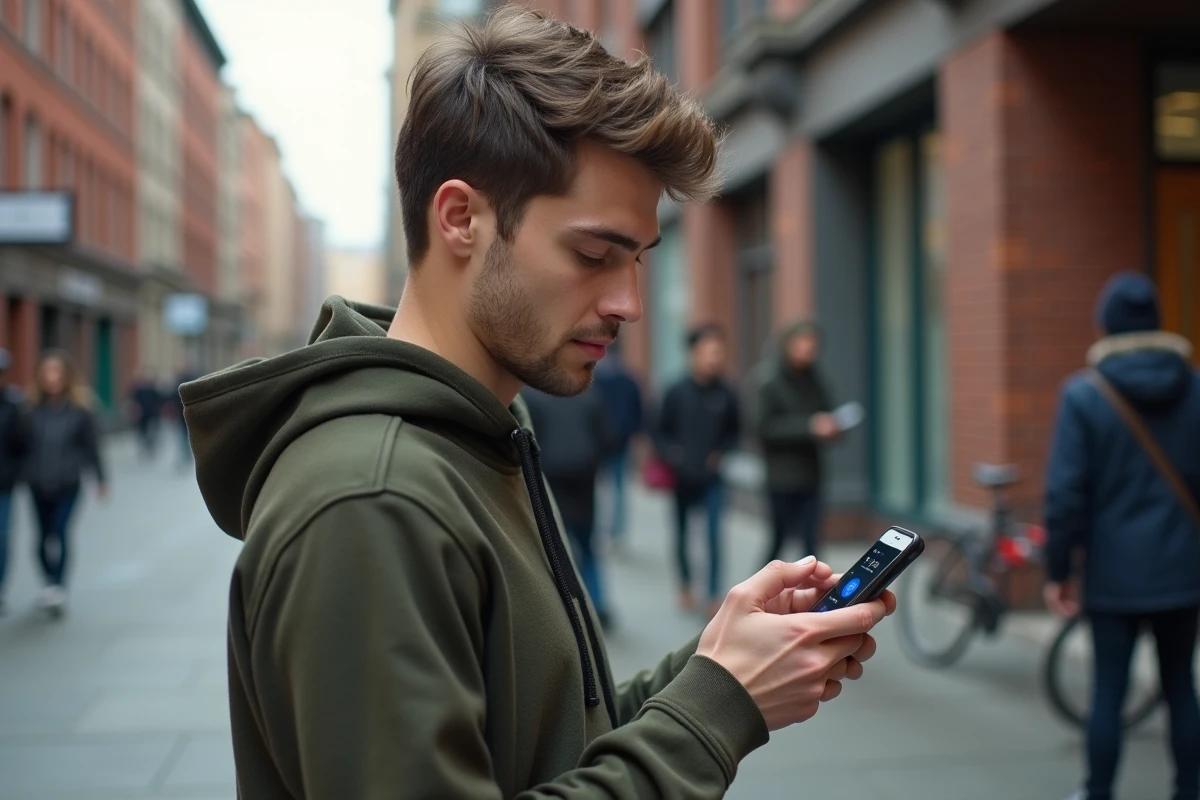
Android and iOS now offer built-in call filters that identify suspicious numbers even before the phone rings. These filters combine data from operators and community reports to display a “likely spam” alert directly on the call screen.
This feature sometimes makes reverse search unnecessary. If your phone already displays “spam suspicion” for an unknown number, searching in a directory will not provide additional information. However, for an unlabelled number that called you without leaving a message, reverse search remains the only way to get a clue about the caller.
The complementarity between native filters and reverse directories outlines a simple strategy: let the smartphone filter the daily flow of unwanted calls, and reserve manual searches for numbers that slip through the filter without automatic identification.